TL;DR: What Is a SharePoint Intranet? A SharePoint intranet is an internal digital workplace built on Microsoft SharePoint where employees access information, communicate, and collaborate. But most SharePoint intranets fail not because of the platform, but because they stop at the foundation. A modern SharePoint intranet requires structure, governance, communication strategy, and continuous optimization to drive adoption and results.
What Is a SharePoint Intranet?
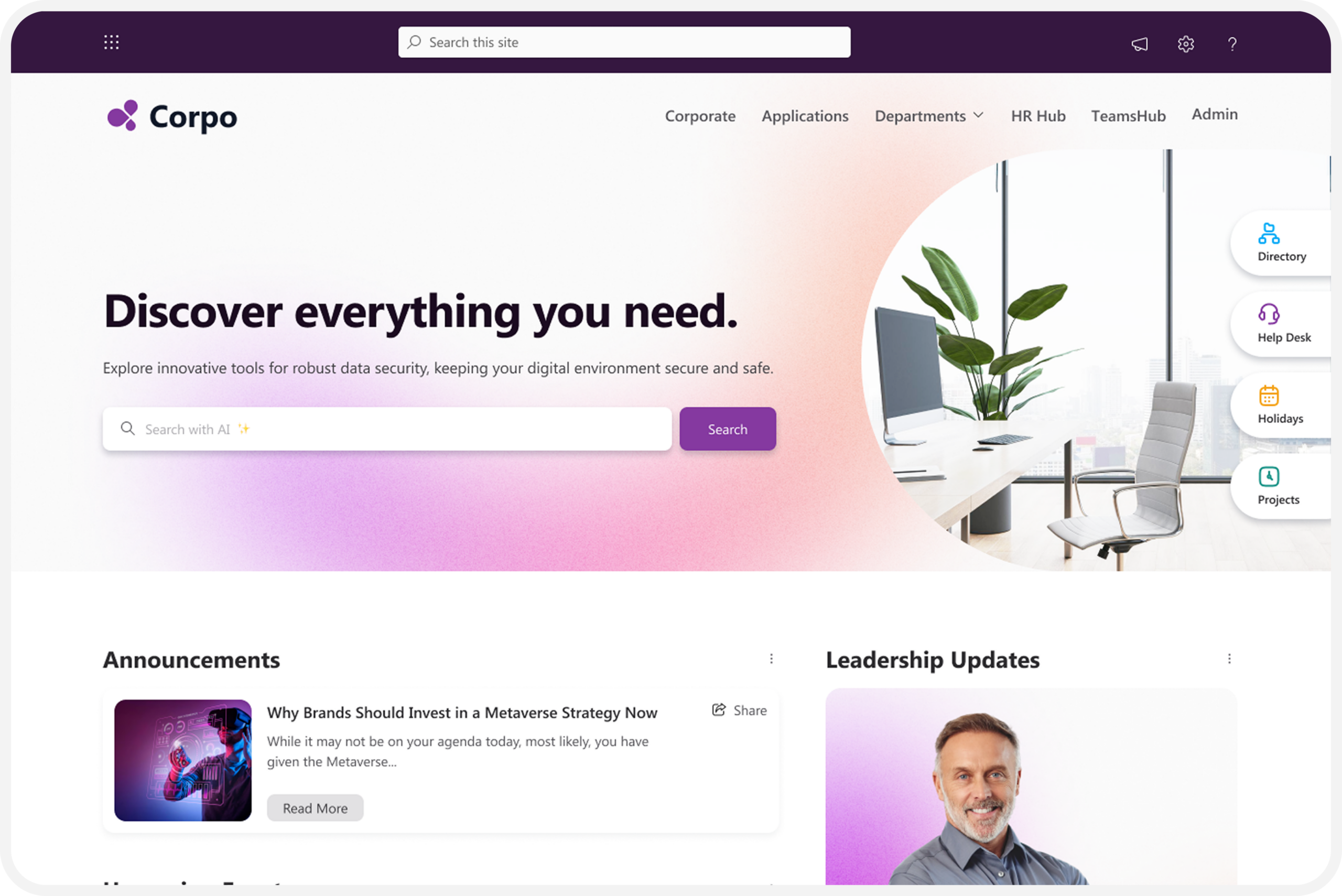
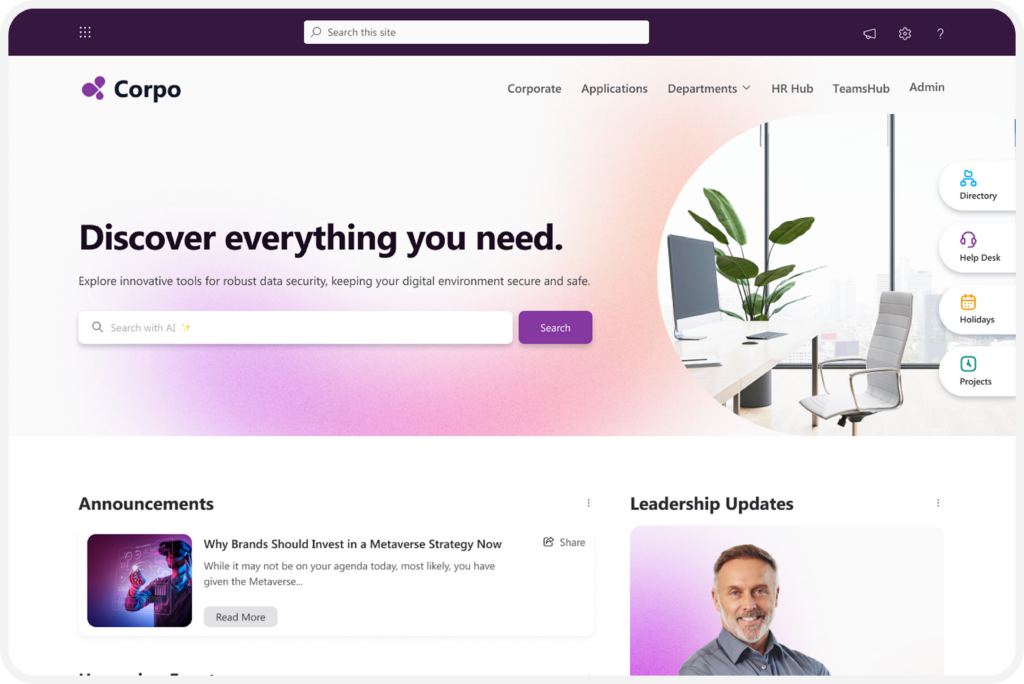
A SharePoint intranet is a private internal platform built on Microsoft 365 that serves as a central hub for your organization.
It’s where employees go to:
- Find company news
- Access documents and policies
- Connect with teams
- Get work done
In many ways, it serves as your company’s digital front door. An intranet brings together communication, knowledge, and tools into a single experience.
The Real Question Isn’t “What Is It?”, It’s “Why Doesn’t It Work?”
Most content stops at the definition.
What buyers actually want to understand is:
Why do so many SharePoint intranets get launched… and then quietly ignored?
The issue isn’t SharePoint itself.
It’s what happens after you stand it up.
SharePoint Gives You the Framework, Not the Experience
SharePoint enables organizations to:
- create sites and hubs
- publish content
- manage documents
- integrate with Microsoft 365 tools
That’s why it’s so often used as the starting point for intranets. But here’s the distinction that matters:
SharePoint is the framework.
The intranet is the experience built on top of it.
If you want a deeper breakdown of that difference, we cover it in detail in our guide to SharePoint vs. intranet.
Why Most SharePoint Intranets Stall After Launch
This is where most organizations run into trouble.
The pattern is consistent:
- The intranet launches with strong initial momentum
- Content is added inconsistently across teams
- Employees fall back into Teams, email, or shared drives
- Usage drops—and leadership starts questioning ROI
Over time, the intranet becomes another place where information exists, not the single source of truth that employees rely on
This is especially common in organizations that treat SharePoint as a finished solution instead of a foundation.
What a Modern SharePoint Intranet Actually Requires
A successful SharePoint intranet is not defined by its features.
It’s defined by how well it supports how employees actually work.
That includes:
- Clear structure so information is easy to find
- Defined ownership so content stays accurate
- Communication that reaches employees beyond a static site
- Integration into daily workflows
You can see how these elements come together in a more complete solution on our enterprise intranet overview.
Without this layer, even well-designed SharePoint environments struggle to drive consistent engagement.
The Missing Layer: Ongoing Enablement, Not Just Implementation
This is where most intranet strategies fall apart—and where this blog intentionally goes beyond your existing content.
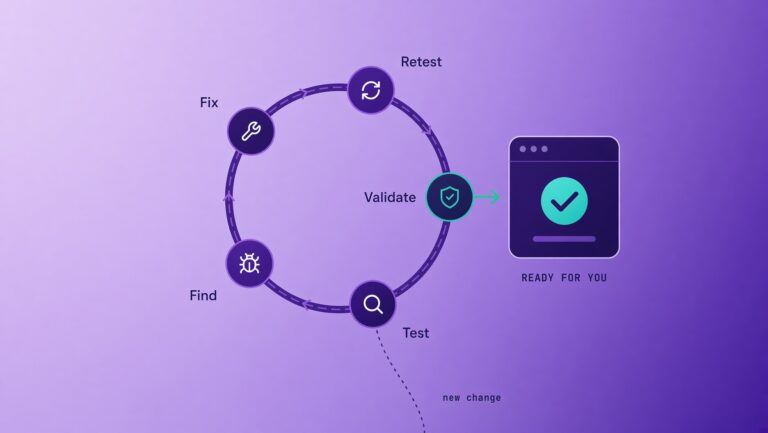
A SharePoint intranet is not a one-time launch. It requires ongoing:
- iteration
- governance
- communication planning
- optimization
Without that, content becomes outdated, navigation becomes fragmented, and trust in the intranet erodes.
At that point, employees don’t consciously reject the intranet—they simply stop thinking about it.
How hubley Approaches SharePoint Intranets Differently
hubley is built on SharePoint, but it’s not simply a layer of design on top of it.
It’s a structured system for turning SharePoint into a working intranet that employees actually use.
Instead of relying on employees to navigate to a site, hubley centralizes communication and delivers it across the intranet, Microsoft Teams, email, and mobile—so important messages are seen in the flow of work.
AI is also embedded directly into the experience. With hubley.ai, employees can generate content, refine messaging, and surface answers instantly across SharePoint, Teams, and connected systems—reducing friction in both content creation and discovery.
Most importantly, hubley introduces a framework—not just pages.
That framework supports:
- policy management
- onboarding experiences
- internal communications
- analytics and reporting
And it’s backed by an ongoing partnership model that ensures the intranet evolves over time rather than stagnating after launch, and it includes support from our customer success team.
The Shift Most Organizations Need to Make
If you’re evaluating a SharePoint intranet, the decision isn’t:
“Should we use SharePoint?”
For most organizations, that answer is already yes.
The real question is:
“What are we putting on top of SharePoint to make it work?”
Because without the right combination of structure, communication strategy, and usability, you don’t have a modern intranet.
You have infrastructure.
What a SharePoint Intranet Really Needs to Succeed
A SharePoint intranet is easy to define.
It’s much harder to execute well.
The organizations that get the most value from SharePoint understand early that success depends on more than just the platform. It depends on how communication is structured, how content is managed, and whether the experience fits into daily work.
If you’re still at the early stage, start with the fundamentals of what an intranet is and how it functions across your organization. From there, you can evaluate what’s needed to take SharePoint further.
SharePoint gives you the capability. A modern intranet gives your employees a reason to use it.